Computer Science · Virginia Tech
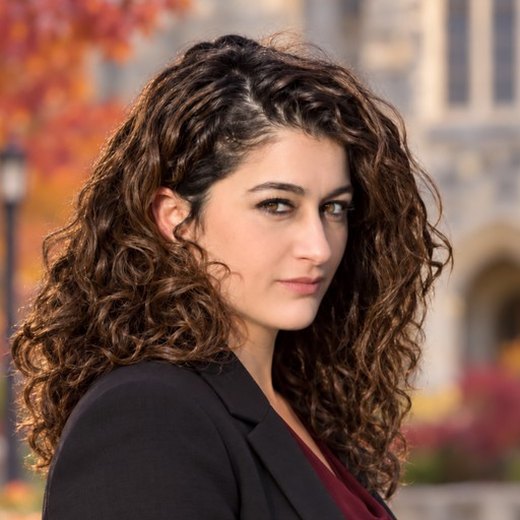
Pinar Yanardag.
Assistant Professor of Computer Science. I build the next generation of generative AI that people can control, align, and personalize, from long-horizon video to interactive worlds. I lead GEM Lab at Virginia Tech.
About
Generative models can imagine almost anything. I make them controllable.
I am an Assistant Professor of Computer Science at Virginia Tech, where I lead the Generative Modeling Lab (GEM Lab). My research focuses on control, alignment, and personalization in generative AI, with an emphasis on video generation and interactive world models.
Since I joined Virginia Tech in Fall 2023, my lab has produced 25+ papers at top conferences including CVPR, NeurIPS, and ICCV/ECCV. My research is supported by an NSF CAREER award on generative cinematography and by industry partners including Google Research, Adobe Research, Snap, and Qualcomm. I was also recognized as an Outstanding Area Chair for CVPR 2026.
I received my Ph.D. in Computer Science from Purdue as a Fulbright Fellow. Before joining Virginia Tech, I was a postdoctoral researcher at the MIT Media Lab and a visiting professor at Boğaziçi University.
You can reach me at [email protected], view my CV, or find me on X.
Beyond research
- Emmy-nominated as a creative director for the main title design of HBO’s Westworld.
- Previously CEO of AI Fiction and co-founder of GLITCH, two startups built around generative AI.
- Featured in TIME, BBC, CNN, NPR, and Rolling Stone with my work at MIT.
- Led How to Generate (Almost) Anything, a Boston-based collective of researchers and artists collaborating on generative AI projects.
- Taught the world’s first AI & Fashion course at London College of Fashion, where student projects went on to be showcased at London Fashion Week.
Research program
How to understand, steer, and personalize generative models, making them more controllable, efficient, and responsive to human goals.
 01
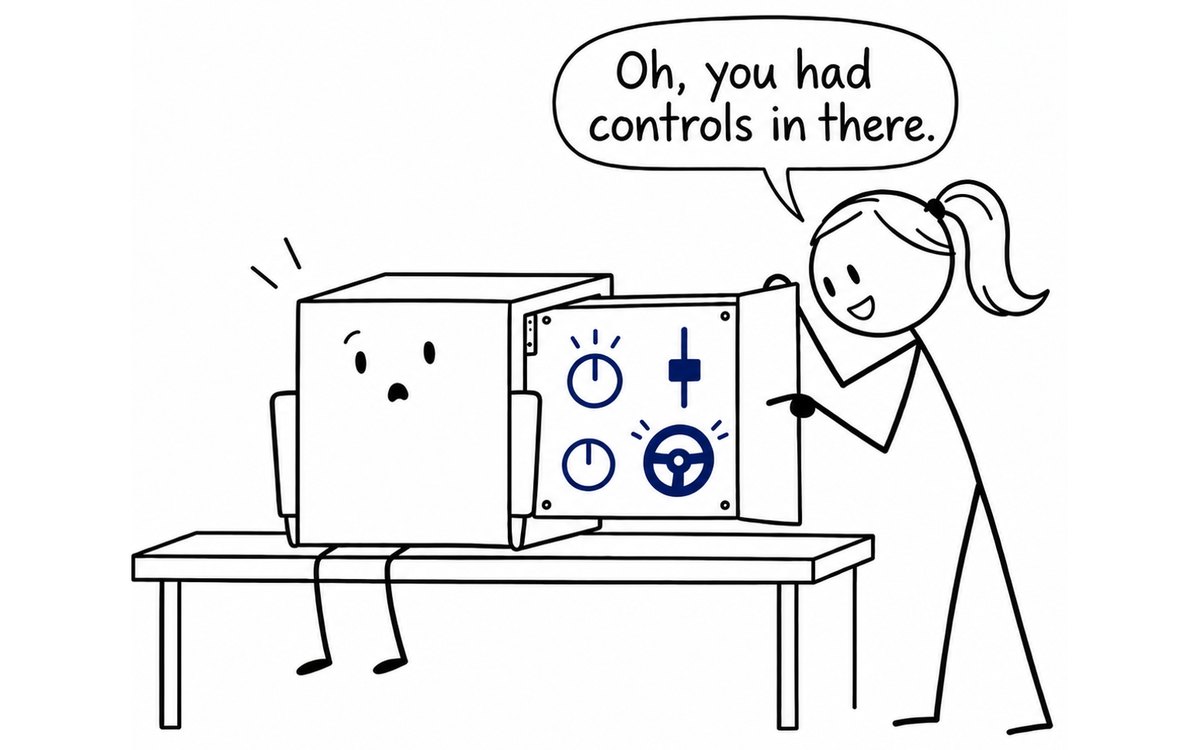
Understanding generative models for control
I study how generative models represent content, motion, and temporal context inside their internal representations, and turn these insights into efficient methods for fine-grained control. Much of this work is training-free: by understanding what a model already encodes, from attention maps to positional and temporal structure, we can steer it without retraining, from editing a single image to directing long-horizon video and interactive worlds.
 02
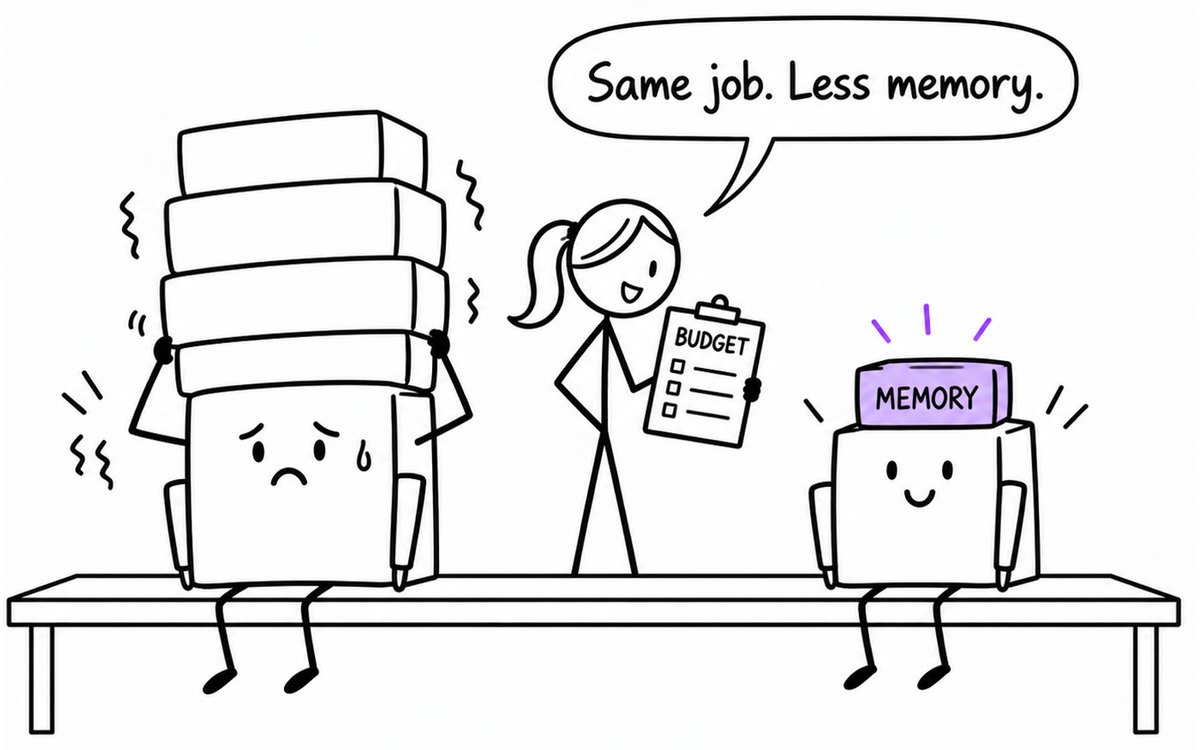
Foundations for efficient and faithful generative models
I rethink how generative models are built so they run longer and stay true to what was asked. On the efficiency side, this means new memory structures, compact latent states, and distillation for long-horizon generation; on the faithfulness side, reward- and preference-guided alignment that steers models toward diverse, physically plausible, and high-quality outcomes.
 03
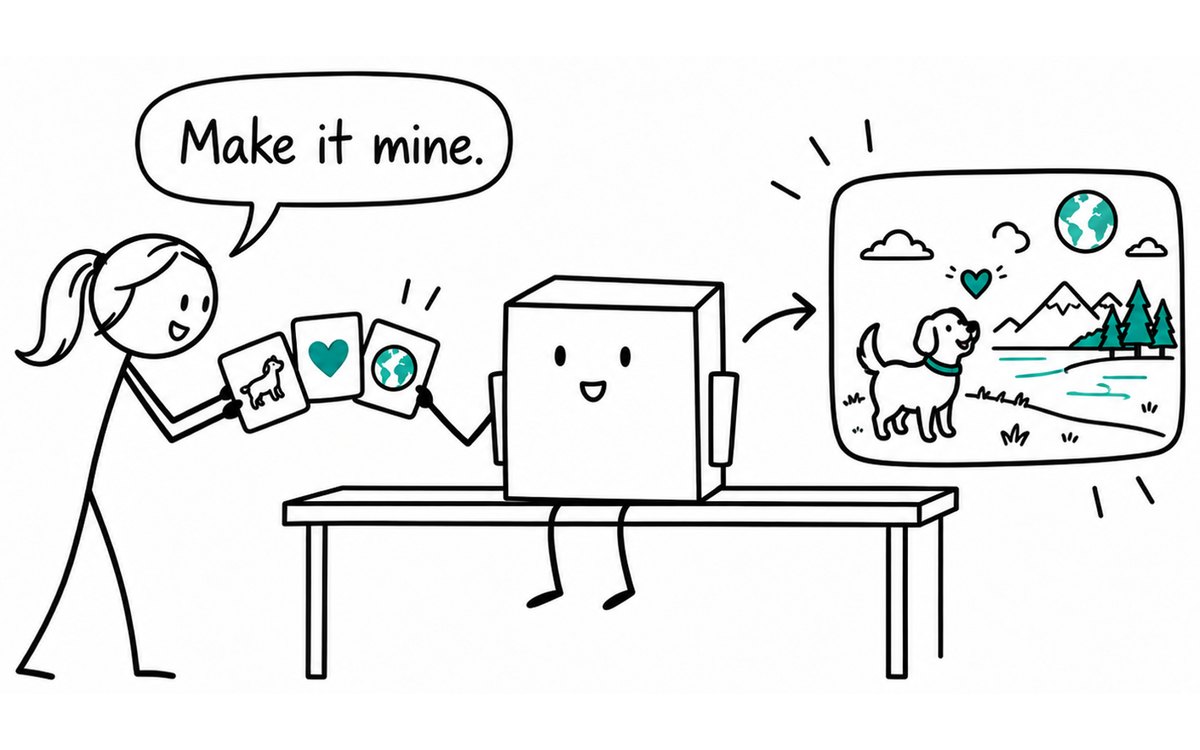
Personalizing generative models to concepts and preferences
A model that can generate anything is only useful if it can generate what matters to you. I personalize generative models to both the concepts people want to depict and the way they want them to look, spanning concept customization and individual preference learning, so that generation reflects a user’s own subjects, visual tastes, and creative goals, from a single image to an interactive world they can step into.
Papers, code, datasets, and demos are on the lab website.
Selected publications
A selection of recent publications. For the full list, visit my lab website.
-
From Zero to Hero: Training-Free Custom Concept Spawning in World Models
Kiymet Akdemir, Pinar Yanardag
-
VideoMLA: Low-Rank Latent KV Cache for Minute-Scale Autoregressive Video Diffusion
Hidir Yesiltepe, Jiazhen Hu, Tuna Han Salih Meral, Adil Kaan Akan, Kaan Oktay, Hoda Eldardiry, Pinar Yanardag
-
AdaState: Self-Evolving Anchors for Streaming Video Generation
Yusuf Dalva, Pinar Yanardag
-
HiPhy: Hierarchical Alignment for Physically-Plausible Multi-Principle Video Generation
Tahira Kazimi, Shubhankar Borse, Munawar Hayat, Fatih Porikli, Pinar Yanardag
-
∞-RoPE: Action-Controllable Infinite Video Generation Emerges from Autoregressive Self-Rollout
Hidir Yesiltepe, Tuna Han Salih Meral, Adil Kaan Akan, Kaan Oktay, Pinar Yanardag
-
Diverse Video Generation with Determinantal Point Process-Guided Policy Optimization
Tahira Kazimi, Connor Dunlop, Pinar Yanardag
News
Five papers accepted to NeurIPS 2026
Spanning long-horizon video synthesis, physically aligned video generation, and controllable world models.
Awarded a National Science Foundation CAREER Award
Supporting our research and education in controllable, accessible generative AI. Award details
Named an Outstanding Area Chair for CVPR 2026
Recognized for service on the CVPR 2026 program committee.
Four papers accepted to CVPR 2026
Including ∞-RoPE for infinite, action-controllable video and DPP-GRPO for diverse video generation.
Four papers accepted to NeurIPS 2025
From training-free dynamic view synthesis to personalized editing, including a Spotlight selection.
Two papers accepted to ICCV 2025
Including CLoRA, selected as a Highlight.
ConceptAttention received Best Paper recognition
For concept-level interpretability in diffusion models, at the CVPR 2025 Visual Concepts Workshop.
Three papers accepted to CVPR 2025
Controllable and personalizable image editing and generation.
Recent talks
- Rethinking Memory: From Long-Horizon Video to Interactive World ModelsInvited talk · Georgia Tech, School of Computational Science & Engineering
- The Art of Taming Video Models: Leveraging Internal Representations for Training-Free ControlKeynote · ICML 2026, From Frames to Stories Workshop
- The Art of Taming Generative AI: From Prompting to Creative DirectionKeynote · CVPR 2026, AI for Visual Arts Workshop
- Leveraging Hidden Priors for Training-free Control: From Long-Horizon Video to Interactive World ModelsKeynote · CVPR 2026, AI-assisted Long Video Creation Workshop
- The Other Half of Personalization: From Customizing Concepts to Personalizing TasteKeynote · CVPR 2026, Personalization in Generative AI Workshop
- Foundations of Controllable and Personalized Generative AIInvited talk · University of Michigan, Ann Arbor
Teaching & service
Courses I’ve recently taught, along with recognition and professional service.
- GradFantastic Generative AI Models and Where to Find ThemDiffusion, rectified flow, and modern generative AI
- GradLearning-based Computer VisionFoundations and modern architectures
- GradHow to Generate (Almost) AnythingCross-disciplinary studio in generative AI across media
- UgradCreative AI CapstoneProject-based studio in generative and creative AI
- UgradEntrepreneurship with Generative AI CapstoneBuilding ventures and products with generative AI
- UgradProfessionalism in CSEthics in AI
Recognition & awards
- Outstanding Area Chair, CVPR2026
- Best Paper, CVPR Visual Concepts Workshop2025
- Best Paper Honorable Mention, ACM Creativity & Cognition2022
- Best Paper, NeurIPS CTRL-GEN Workshop2021
Professional service
- Lead Organizer, P13N WorkshopCVPR · ICCV
- Co-organizer, Responsible AI WorkshopCVPR 2025
- Area ChairCVPR · ICCV · ECCV · WACV · AAAI
Interested in joining GEM Lab?
I receive a high volume of inquiries from prospective students and unfortunately I am not able to respond to individual emails regarding admissions.
If you are applying to the Virginia Tech Computer Science graduate program and are interested in working with me, please mention Pinar Yanardag / GEM Lab in your application and describe how your research interests connect with our work.
For research collaborations, invited talks, and industry partnerships, please feel free to reach out by email.
- Email[email protected]
- OfficeDepartment of Computer Science, Virginia Tech, Blacksburg, VA 24061
- Labgemlab-vt.github.io
- ScholarGoogle Scholar
- X@pinguar